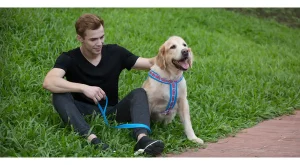
From pulling to walk together friendly—–suitable for dogs of all ages and temperaments
joyful and bonding experience, not a pull between volition and physical strength. However, for many dog owners, the pulling and tangling of the leash, and dragging of dogs turn daily walks into stressful chores. Fortunately, regardless of a dogs’ age or breed, every dog can learn how to walk politely on a leash through patience, consistent methods, and positive reinforcement.
This guide breaks down leash training into actionable, scientifically validated steps, focusing on rewarding good behavior rather than punishing mistakes. Whether you are training a lively puppy or correcting habits in an adult dog, these methods will help you establish a calm and harmonious walking partnership.
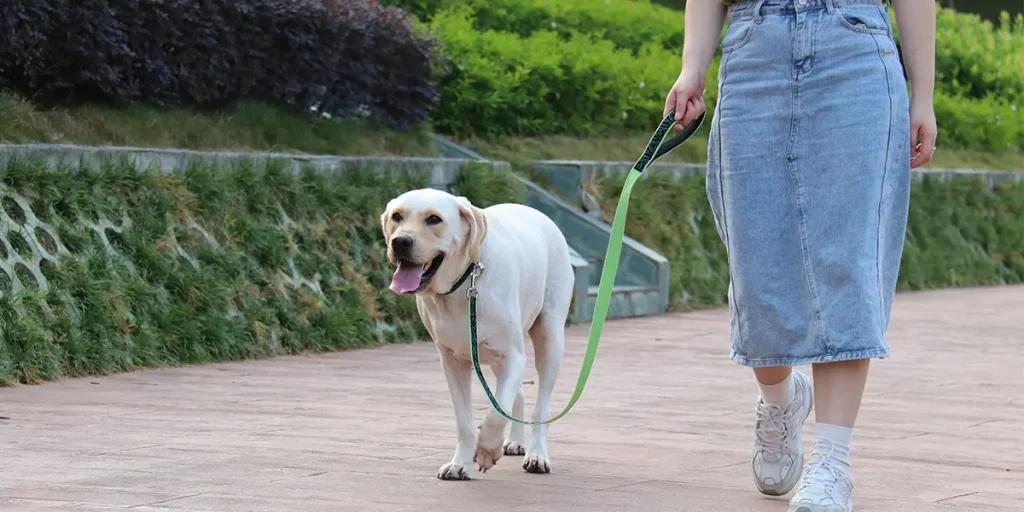
Part 1: preparatory phase–lay a solid foundation for success
1. Choosing suitable training gears
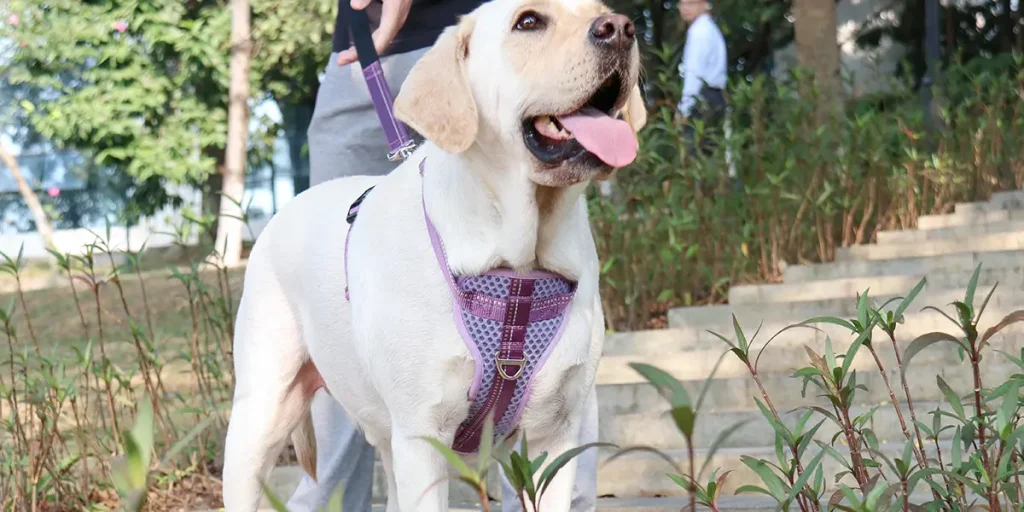
- Collars/Harnesses: Choose a well-fitting, non-tightening collar or a front-clip harness, which can reduce the pulling.
- Leashes: a leash with fixed length of 4–6 feet (about 1.2–1.8 meters) is the best for training. Don’t use a retractable leash in the initial training
- Food used as a reward: Prepare high-value treats that your dog loves eating, such as chicken jerky, cheese cubes, or specialized training treats.
2. A good mindset and environment
- Keep patient and positive: Your emotions can affect the state of your dog
- Start in a low-interference environment—such as at home or in a quiet yard, then gradually transition to more complex environments
Part 2: Four-stages Training Plan
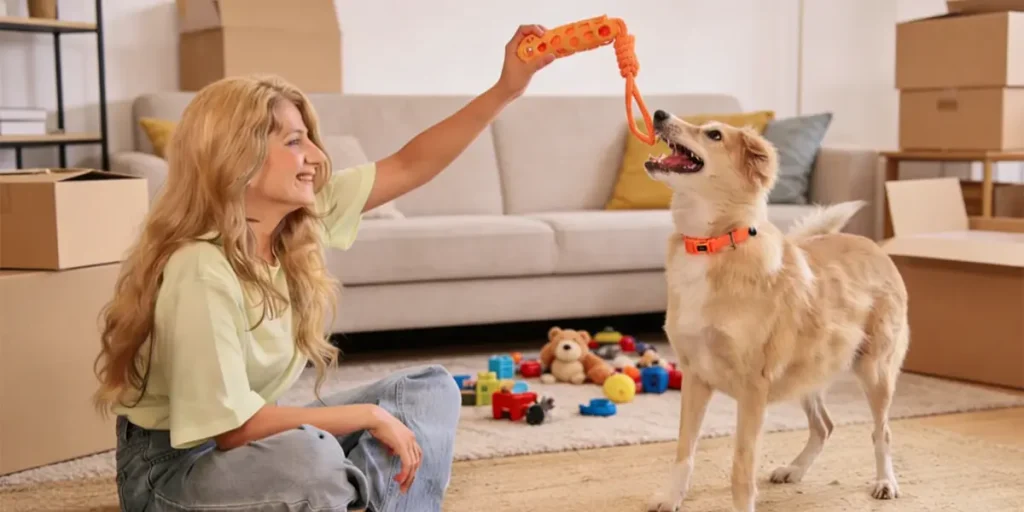
the First stage: Establish positive associations indoors
Objective: To make the dog associate the leash with pleasant things
Have your dog wear a collar/harness and leash at home, and play with them, if he doesn’t resist, give him a snack as a reward.
Repeatedly attach and unattached the leash to help the dog get used to the sound and feeling.
Reward calm behavior with snacks and praise.
the Second stage: Teach “Loose Leash Walking” indoors or in a quiet area
objective: Establish the rule of “moves when the leash is loose, and stop when the leash is tight “
- Call your dog to your side with dog treats and say “go “to start
- When the dog completes the action as instructed while the leash is loose, immediately give him a treat as a reward
- Practice turning and stopping: frequently change directions and reward the dog for adjusting its position and staying in line
- Gradually increase the number of steps between rewards
The third stage: Dealing with Pulling and Distractions (Transitioning to Outdoor Activities)
Objective: To make the dog understand that pulling is ineffective
- “Stop and Wait”: As soon as the leash tightens, immediately stop moving. Once the dog turns around or the leash loosens, reward it and continue walking.
- “Turn Around and Go the Opposite Way”: If the dog runs forward, immediately turn around and walk in the opposite direction, if he follows you, reward it with treat.
- Use high-value rewards during high distractions: if your dog remains calm and doesn’t pull on the leash when he sees other dogs or passes through areas with many vehicles and pedestrians, treat him a with particularly tasty treat
The fourth stage: Generalization and Reinforcement (walking in true scene )
Objective: To reinforce good accompanying habits in different environments.
- Start with short walks in quiet neighborhoods and gradually increase the distance and level of distractions.
- Random rewards – sometimes give a treat after 10 steps, sometimes after 30 steps, to maintain the dog’s focus.
- Introduce the instruction of “Look at me” to encourage your dog to actively pay attention to you while walking.
Part 3: Common issues and Solutions
| Issue | Solution |
| The dog becomes overly excited when sees the leash | Perform “Leash Desensitization Training”: Keep the leash in a visible place, randomly pick it up but don’t go outside. If remain calm, reward him |
| The dog pulls and runs toward other people or other dogs | First, increase the distance. Give high rewards for his calm behavior. Cross the street or move further away until the he can refocus on you. |
| Senior dogs or dogs with health issues | Maintain a training time of 3-5 minutes. Consult a veterinarian for advice. Use a harness for better support. |
| The training results vary among different family members | Ensure that everyone uses the same instructions, rules, and reward methods. Conduct a brief “rule synchronization training” at home. |
| Slow progress | Celebrate for every small success! Some dogs may take several weeks or even months to master leash walking. Consistency is key. |
Part 4: Key Principle Reminders
- Keep the training short and positive—finish the training before the dog gets tired or frustrated
- Always reward the behavior you want to see—ignore or redirect negative behavior instead of punishment .
- Consistency in time and personnel—family members should follow the same training methods
- Layered training—start with the simple and gradually increase the difficulty (distance, duration, interference)
- Make the training fun—train your dog with pleasant sounds, play small games, and delicious treat.
Conclusion
Off-leash training is not just about teaching the dog not to pull on the leash; it is also a process of building communication, trust, and shared exploration. Whether you are taking a walk in the park or strolling through city streets, a calm and harmonious walking experience will deepen the bond between you and your dog.
Please keep in mind: every dog has its own pace of learning. Keep patient, positive, and celebrate for every step forward. With passage of time and continued effort, you will eventually turn the tugging and struggling into a peaceful and enjoyable walk.

Hi, my name is Lina Zhang, I am the author of this article, and also the Founder of Lucky MFG, with 15 years of experience in the pet product industry. If you have any questions, you can contact me at any time.