Choosing the right collar for your dog is a major decision that impacts their safety, comfort, and training success. While the variety of styles—from leather and nylon to prong collars and harnesses—can feel overwhelming, many owners and trainers are turning to the Martingale collar as a more effective and humane solution.
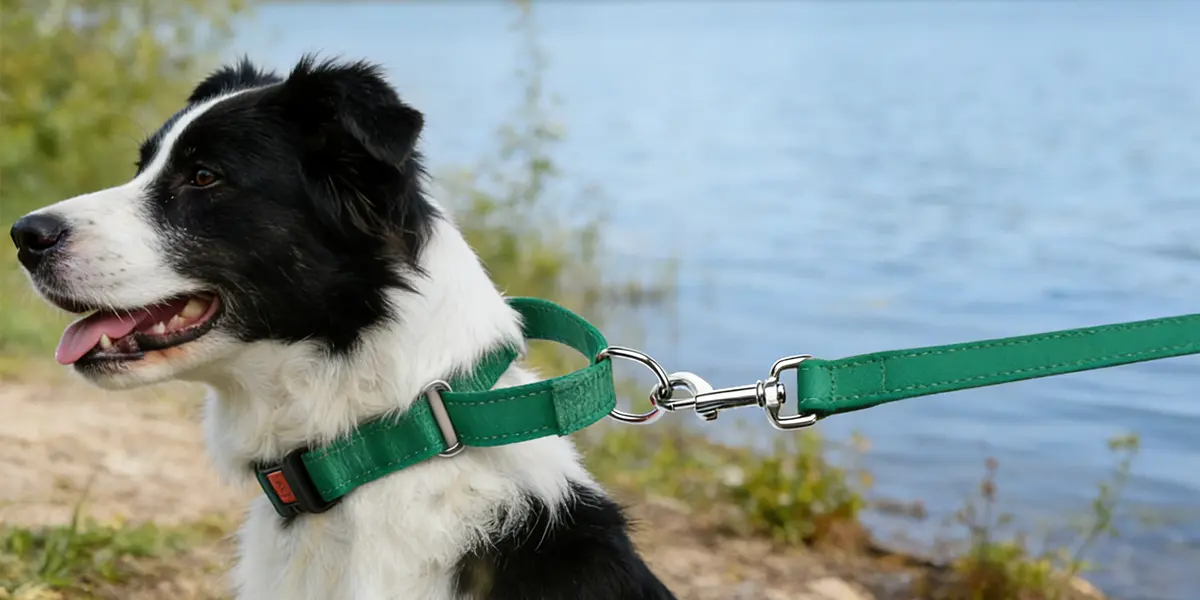
1: The Anatomy of Control — How Martingales Work
A Martingale collar is a specialized design created to provide more control during walks while remaining safe and comfortable for your dog. Unlike a standard buckle collar that stays at a fixed size, the Martingale features a unique two-loop system:
- The Main Loop: This is the larger loop that rests comfortably around your dog’s neck.
- The Control Loop: This is the smaller loop where the leash attaches, which tightens gently when tension is applied.
- The Mechanism: When your dog pulls, the collar closes just enough to prevent slipping out without choking. Once tension is released, it automatically loosens back to its original fit.
2: The Decision Matrix — Is a Martingale Right for Your Dog?
It’s easy to confuse a Martingale with a standard collar, but their functions differ significantly. Use this guide to determine the best fit for your needs:
Comparison: Martingale vs. Regular Collars
- Fit: Regular collars have a fixed size; Martingales adjust gently when the dog pulls.
- Escape Prevention: Regular collars can slip off narrow heads; Martingales prevent slipping via the two-loop design.
- Pressure: Regular collars exert constant pressure if pulled; Martingales tighten only when needed.
- Best Use: Regular collars are for everyday wear; Martingales are ideal for training and leash manners.
When to Choose a Harness Instead
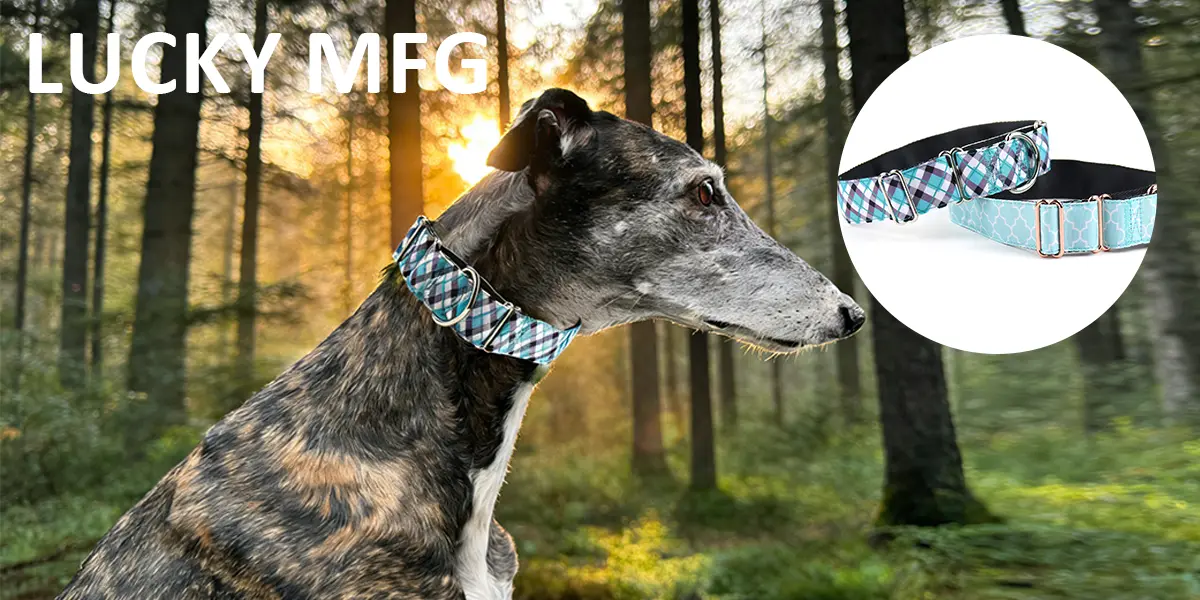
Harnesses, especially no-pull varieties, are excellent for dogs with respiratory issues or small breeds as they distribute pressure across the chest. However, Martingales are superior for training leash manners, managing “escape artists,” and specific breeds like Greyhounds and Whippets whose heads are narrower than their necks.
3: The Practical Guide — Safe and Effective Usage
To get the most out of your collar and ensure your dog’s safety, follow these industry-standard guidelines:
1.Achieving the Perfect Fit
The collar should be snug when the control loop is pulled tight, but it must never be tight enough to choke the dog. It should rest comfortably on the neck when there is no tension.
2.Critical Safety Boundaries
- Supervision: Avoid leaving the collar on while the dog is unsupervised or at home, as the loops can catch on furniture or objects.
- Technique: Avoid yanking the leash; let the collar provide gentle correction when the dog pulls.
- Positive Reinforcement: Always pair the collar’s feedback with praise and rewards when your dog walks calmly by your side.
3.Who Benefits Most?
- Narrow-headed Breeds: Essential for Sighthounds like Salukis and Whippets.
- Rescue Dogs: Ideal for newly adopted dogs prone to escaping out of fear.
- Puppies: A great tool for teaching leash manners without harsh corrections.
- Strong Pullers: Offers a firm but humane alternative for dogs transitioning away from choke or prong collars.
Final Thoughts
The collar you choose plays a vital role in your dog’s comfort and training success. A Martingale offers a smart, gentle, and effective way to manage pulling and prevent escapes. With the right tool and a bit of patience, even the most enthusiastic puller can become your perfect walking companion.

Hi, my name is Lina Zhang, I am the author of this article, and also the Founder of Lucky MFG, with 15 years of experience in the pet product industry. If you have any questions, you can contact me at any time.