
Have you ever been captivated by the rhythmic waddle of a Corgi or the “sausage-link” silhouette of a Dachshund? These “low-chassis” dogs are social media royalty, but their lineage is far more diverse than most realize.
Today, we dive deep into the world of these ground-hugging companions—exploring the science behind their build, their historical roles, and the unique charm of each breed.
1. The Science of the “Short”: Why the Low Stature?
From a biological perspective, the physique of most short-legged dogs stems from a genetic trait known as Chondrodysplasia (a form of dwarfism). This affects the growth of long bones, resulting in the signature long-body, short-limb ratio.
Far from being a “defect,” this was a deliberate choice in selective breeding. Humans developed these traits for specific functional tasks: navigating dense underbrush, flushing foxes from narrow burrows, or nipping at the heels of cattle while safely ducking beneath their kicks.
2. Low-Chassis Legends: The Herding Group
Despite their stature, these dogs possess incredible explosive power and agility. They were once the backbone of farm operations.
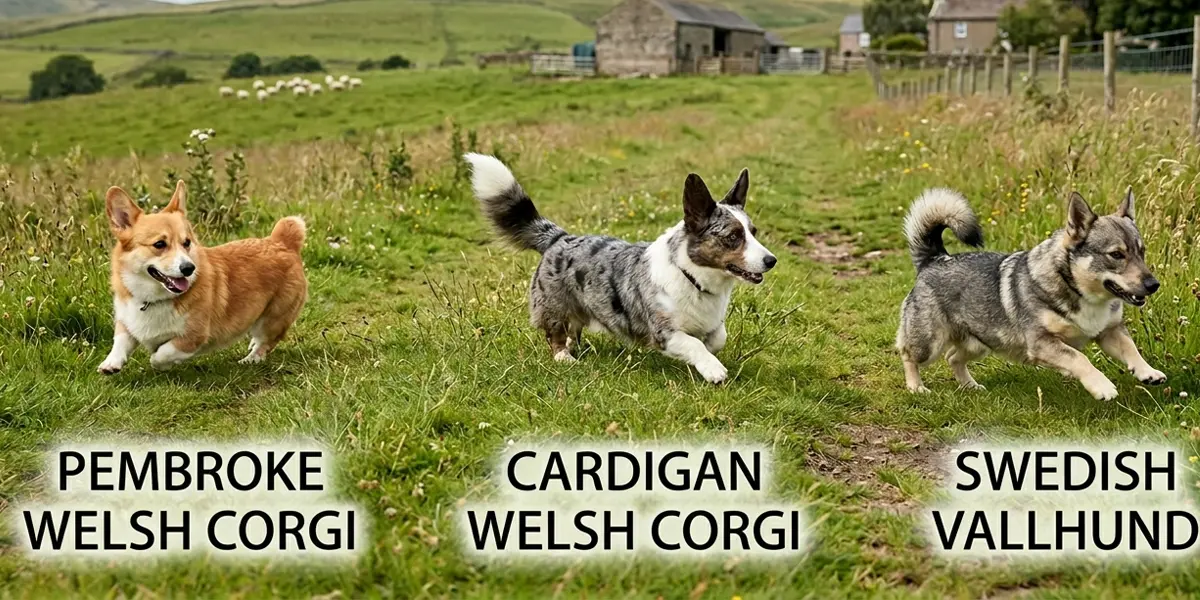
- Pembroke Welsh Corgi: The world’s most famous “bobtailed” herder, known for an outgoing and bold temperament.
- Cardigan Welsh Corgi: Distinguished by a long, fox-like tail and a slightly heavier set; they are often more reserved and alert than their Pembroke cousins.
- Swedish Vallhund: Often described as a “Viking dog” or a “Corgi-wolf,” this ancient Spitz-type breed is a master of low-level herding with a rugged, agile frame.
3. Natural-Born Tunnelers: The Terriers
For Terriers, short legs were a survival necessity, allowing them to pursue prey deep into subterranean dens. They are defined by their “big dog” grit in small packages.

- Scottish Terrier (Scottie): Famous for their wiry coat and iconic “old man” beard.
- West Highland White Terrier (Westie): A hardy, white-coated hunter with a sturdy, ground-level center of gravity.
- Skye Terrier: Known for a long, silky coat that often hides the legs entirely, making them look as if they are gliding across the floor.
- Sealyham Terrier: A powerful, brave specialist once used for hunting badgers in tight quarters.
- Norfolk & Norwich Terriers: Among the smallest of the working terriers—compact “pocket rockets” built for stamina.
- Australian Terrier: Developed for the rugged Outback, featuring sturdy limbs designed for digging and vermin control.
4. Masters of Scent and Tracking: The Hounds
By keeping their center of gravity low, these hounds stay closer to the ground, allowing them to track even the faintest scent trails without losing momentum.
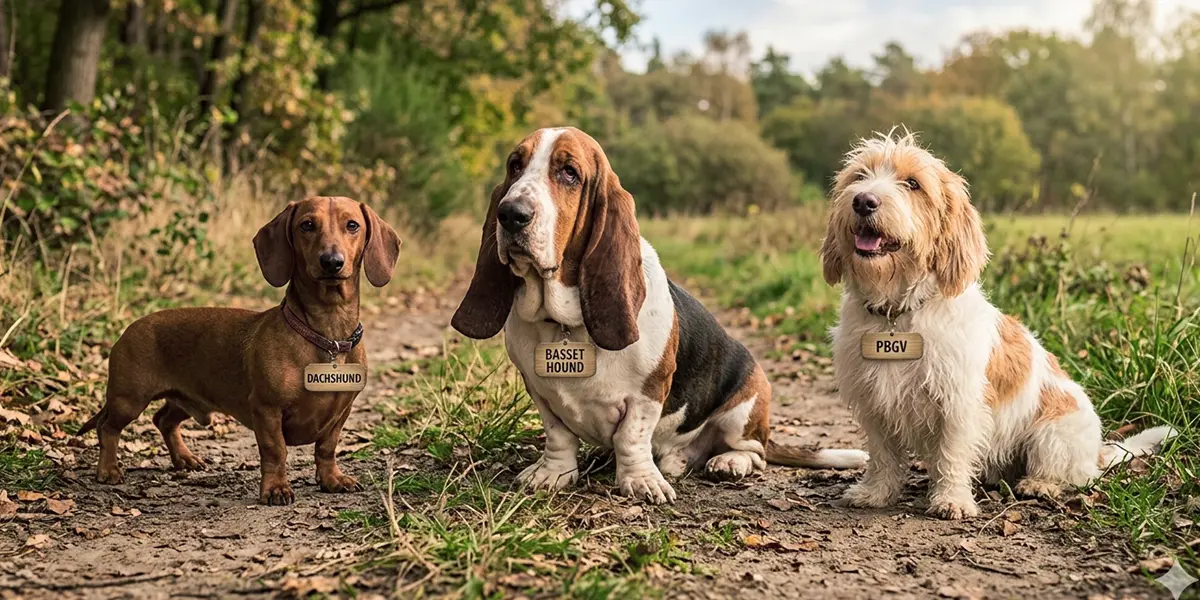
- Dachshund: The quintessential “wiener dog.” Whether smooth, wire-haired, or long-haired, they remain elite burrow-hunting experts.
- Basset Hound: Characterized by heavy bone density, pendulous ears, and an unparalleled sense of smell second only to the Bloodhound.
- Petit Basset Griffon Vendéen (PBGV): A “happy” French rough-coated hound designed for navigating thick brambles and brush.
5. Elegant Companions: Toy and Non-Sporting Breeds
In these breeds, short legs emphasize their charm and “lap-dog” appeal. Many of these were once the pampered favorites of royal courts.
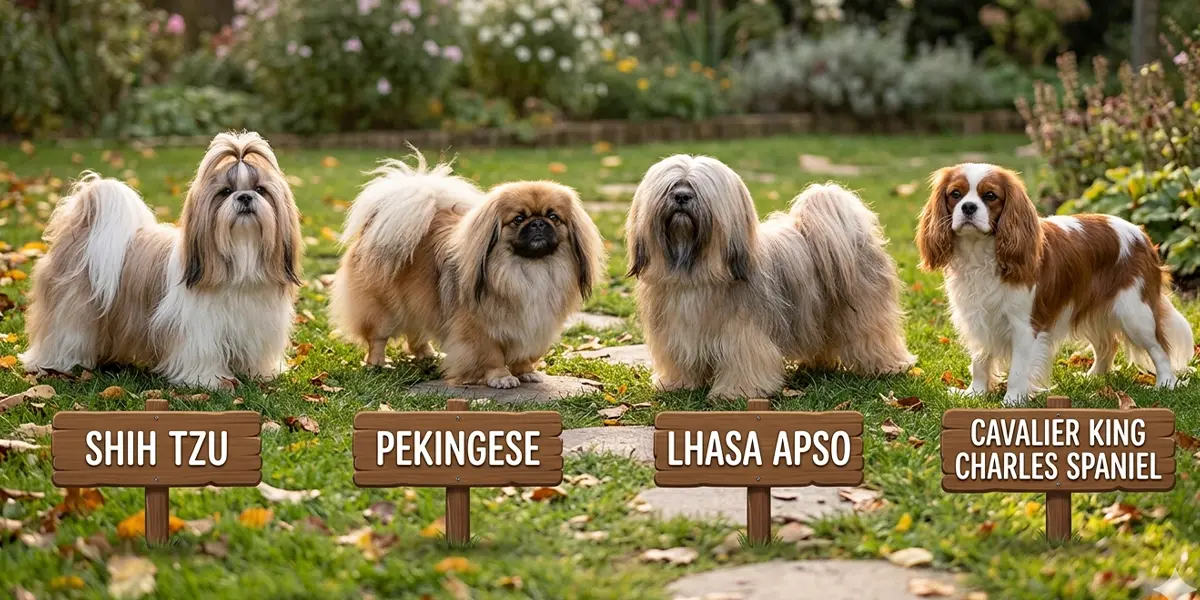
- Shih Tzu: An ancient breed whose flowing coat and proud, low-to-the-ground gait exude elegance.
- Pekingese: Possessing a lion-like dignity and a unique “bowed” leg structure historically bred for the Chinese imperial family.
- Lhasa Apso: A hardy Tibetan breed with a dense coat and a sturdy, grounded stance.
- Cavalier King Charles Spaniel: While not as extreme as a Corgi, their proportions favor a low, balanced, and stable stature relative to their length.
6. The “Powerhouse” Build: Stocky and Low
These breeds prove that “short” does not mean “delicate.” They boast significant muscle mass and deep chests.
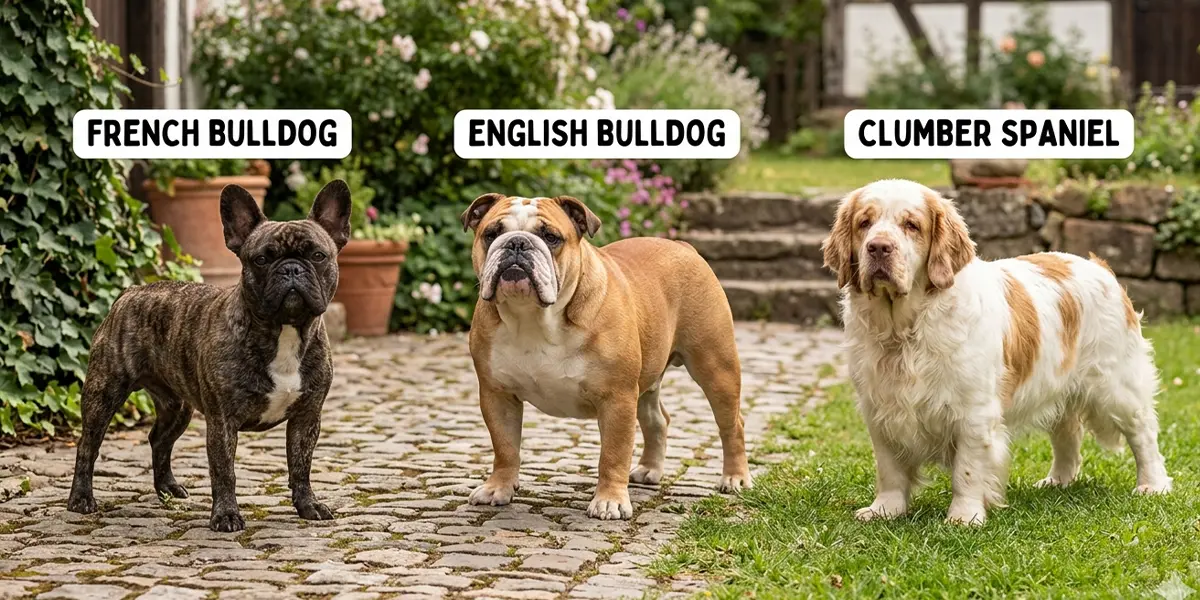
- French Bulldog: A compact “bat-eared” powerhouse with thick, sturdy limbs.
- English Bulldog: Even wider and heavier, featuring a low-slung, powerful frame built for stability.
- Clumber Spaniel: The “heavy infantry” of the Spaniel world; a massive, low-profile bird dog with immense endurance in dense cover.
7. Health & Wellness: Caring for Your “Low-Rider”
Due to their unique anatomy, these breeds require specialized care to ensure a long, pain-free life:
- Spinal Protection: Avoid frequent jumping from high surfaces (sofas, beds, or cars). For long-backed breeds, using pet ramps is highly recommended to reduce the risk of Intervertebral Disc Disease (IVDD).
- Weight Management: Every extra ounce puts significant strain on the spine. A strict, high-quality diet is the best medicine for bone health.
- Professional Gear:
- Avoid Neck Collars: Pressure on the neck can indirectly stress the spine.
- The “H-Harness” (Roman Harness): For deep-chested or long-bodied breeds (like Frenchies or Dachshunds), use a multi-point adjustable harness that distributes pressure across the chest rather than the throat.
- Durability: Opt for high-strength materials like 1000D Nylon with reflective stitching to ensure visibility for dogs that sit lower in a human’s line of sight.
Conclusion
Whether it’s the feisty spirit of a Terrier or the powerful stance of a Bulldog, short-legged dogs are masterpieces of specialized breeding. Understanding their physical needs and providing professional care is the best way to honor these “low-rider” companions.

Hi, my name is Lina Zhang, I am the author of this article, and also the Founder of Lucky MFG, with 15 years of experience in the pet product industry. If you have any questions, you can contact me at any time.


